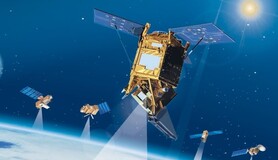
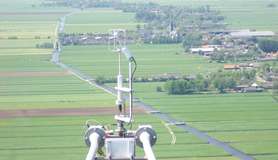
Research & development at KNMI is mission-driven. The scientific activities are divided over four R&D departments
Programme of the KNMI research & Development Day - 17 September 2026
The potential wind is the wind speed one would measure under ideal conditions, i.e. on a wind mas...
We present observations of atmospheric gravity waves (AGW) on the Dutch North Sea, using short-ra...
We present observations of a gravity wave (GW) event over the Netherlands and Belgium in the nigh...
In July 2021 a cut-off low pressure system caused extreme daily precipitation sums, leading to hi...
Ultraviolet (UV) radiation plays a critical role in both beneficial and harmful health outcomes, ...
Significant trends of ultraviolet radiation (UVR) have been reported at limited European sites du...
Background & aim 25-hydroxyvitamin D (25OHD) level, the vitamin D status biomarker, is influ...
Wetland methane (CH4) emission seasonality is a major yet uncertain component of the global CH4 s...
Africa and the Middle East contribute significantly to global fossil fuel production, yet the ass...
The Royal Netherlands Meteorological Institute (KNMI)
Is the dutch national weather service. Primary tasks of KNMI are weather forecasting, and monitoring of weather, climate and seismic activity. KNMI is also the national research and information centre for meteorology, climate, air quality, and seismology.